
A package delivery driver in Fairburn, Georgia, started her first day on an unremarkable 78°F morning and never finished her route. She became dizzy, developed a severe migraine, and passed out in her delivery van. EMS responded.  If your organization employs delivery drivers, warehouse workers, or anyone in non-climate-controlled environments, heat illness is a risk you should be actively managing. And, if your workforce is offsite, the challenge is compounded. "For people working out by themselves, they really have to know their body and the response plan," says Kelsey Keith, Director of Loss Control at Kinetic.

Delivering Safely This Winter Season for Delivery Drivers
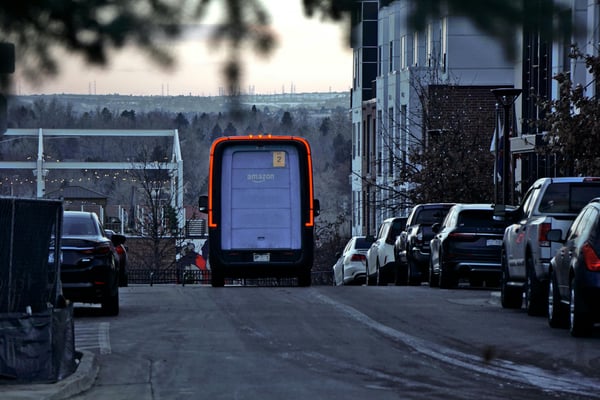
Winter delivery brings shorter days, icy roads, and unpredictable weather, which DSP drivers face across the U.S., especially in colder regions like the Midwest, Northeast, and Mountain States. According to NCCI, cold days near freezing lead to more workers’ comp claims, with slip-and-fall injuries and vehicle accidents spiking up to 10 percent higher than on milder days.

How to Prevent Dog Bites for Delivery Drivers: Essential Safety Tips
The sun’s out, the kids are home, and the gates are wide open. For delivery drivers, it’s peak dog bite season.

Prevent Slips and Falls: Winter Safety Tips for Delivery Drivers
We hear it all the time: “I slid down the steps because they were icy,” or “I went head over heels on ice.” These real-world incidents drive injury claims every winter. Slips, trips, and falls ranked as the third most common workplace injury in 2020, with winter weather making them more frequent.
The hidden cost of workplace injuries: What you can't afford to ignore
Workplace injuries—common among frontline workers—are costly to employers and employees alike.

Ergonomics in action: How to reduce high-risk postures and prevent MSDs
Musculoskeletal Disorders (MSDs) account for nearly 30% of all workers' compensation costs, according to the Bureau of Labor Statistics (BLS). These injuries, caused by repetitive motions, high-risk postures, and excessive strain, lead to higher injury rates, lost productivity, and increased workers’ compensation expenses.